A brand identity designer is a professional who creates and documents a business’s visual identity. That includes the logo, color palette, typography, imagery style, and brand guidelines. They build a consistent look that works on your website, social media, packaging, and print. Most small business projects take 4 to 8 weeks and cost roughly $2,500 to $15,000, depending on scope.
A brand identity designer builds the visual system that makes your business look like one business everywhere. That means your logo, colors, fonts, image style, and the rules for using them. You hire one when your business is better than it looks.
“I don’t like my website.” That’s usually the trigger right there. Right behind it comes: “My images and content don’t seem to match.”
Those lines tell me something bigger is going on. The owner has great service and happy customers. But the look says something different. Other people can see that gap, even when they can’t name it. And it costs you trust.
Here’s a number that stuck with me! One study found people form an opinion of a product in about 90 seconds. Up to 90% of that opinion comes from color alone according to Emerald Publishing’s article Impact of Color In Marketing. That’s all the time you get.
I’m a brand identity designer myself, so I’m biased. I’ll say that up front. This guide covers what I do, what you get, what it costs, and which 9 questions to ask before you sign.
What Does a Brand Identity Designer Do?
The person you hire matters more than anything else. A $5 logo and a $5,000 logo can look similar at a glance. What’s different is the thinking, the files, and whether you own it. Here’s how the tiers break down in 2026.
A brand identity designer turns your business strategy into a visual system. They design the logo, pick colors and fonts, set an image style, and write the rules so everything stays consistent.
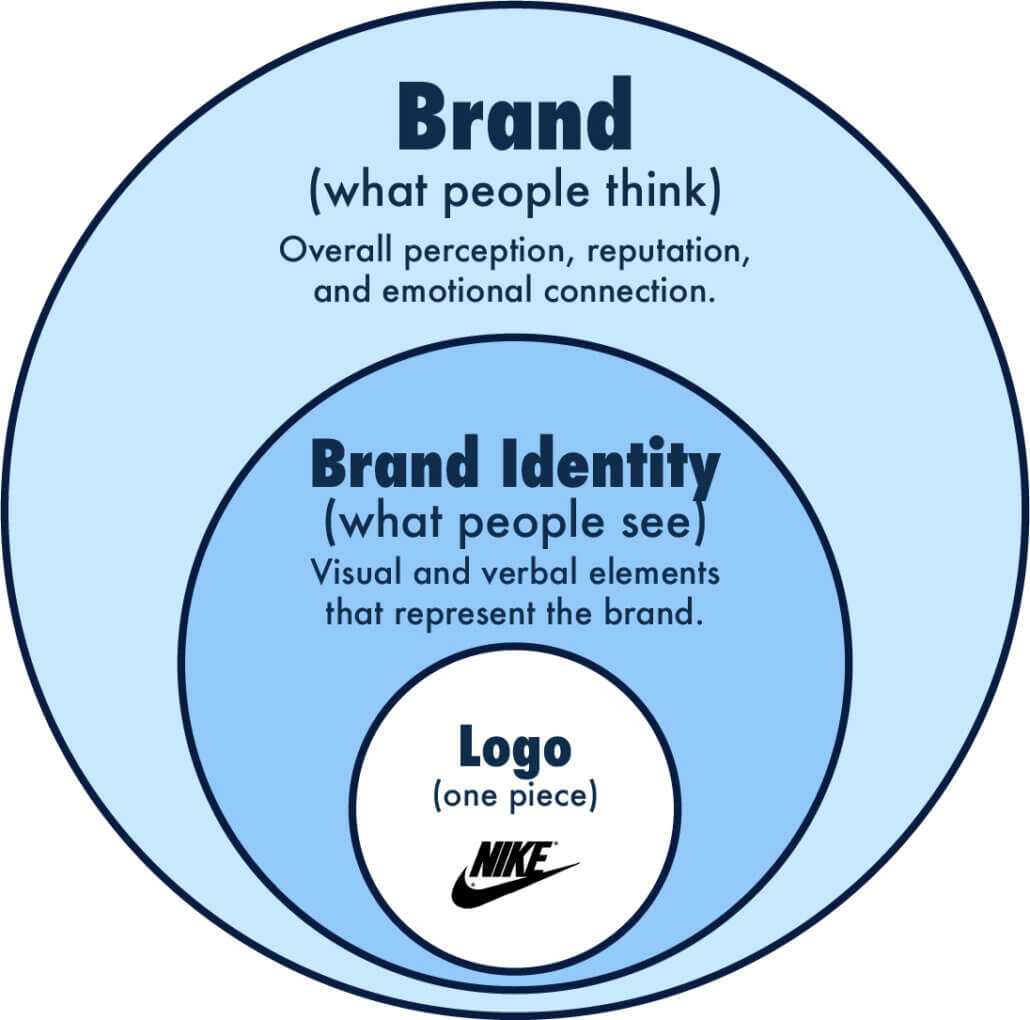
Here’s the simple version. Your brand is what people think about you when you’re not around. Your identity is what they see. The designer shapes the second part so the first part goes your way. The American Marketing Association describes brand identity the same way: the visual and symbolic pieces that represent a brand.
A normal project includes:
- Asking questions. Who do you serve? Why do they pick you?
- Studying competitors. The goal is to look different, not similar.
- Designing the pieces. Logo, color, type, icons, imagery.
- Writing the rules. A guide anyone on your team can follow.
- Stress testing. Tiny on a phone. Huge on a truck. Black and white on a receipt.
What a Brand Identity Designer Does Not Do
A brand identity designer does not run your IT. Thank god we’ve gotten past 2005 on this. This is the biggest wrong guess I run into. Clients assume that if I build their brand, I also handle every technical thing behind their website.
Here’s where I draw the line. I design and build websites that support the identity. I handle backups and the setup it takes to deliver a working site. I stay out of massively huge database migrations (for now), server administration, and other heavy IT work.
Custom features are the gray area. One client needed a custom menu system. I built it with the tools I had. But the back-and-forth and extra development showed me it didn’t belong in my standard process. Having the skill to build something doesn’t mean it’s the best use of your time or your money.
I also can’t fix your slow shipping or pick your next hire. I can shape how people see you. That’s a big job, and it’s plenty.
Brand Identity Designer vs. Graphic Designer vs. Logo Designer
A brand identity designer builds the whole visual system. A logo designer makes one mark. A graphic designer makes single pieces like flyers and posts.
Titles overlap a lot. Many brand identity designers also do light strategy. So always ask what’s included, not what the person is called.
| Role | Main job | What you get | Best for |
|---|---|---|---|
| Brand identity designer | Builds the full visual system | Logo, colors, fonts, imagery, guidelines, templates | Looking consistent everywhere |
| Logo designer | Designs one mark | Logo files and a few variations | An early idea or quick fix |
| Graphic designer | Designs individual pieces | Flyers, social posts, brochures, menus | Ongoing marketing work |
| Brand strategist | Defines who you are and who you serve | Positioning, messaging, audience research | Owners unsure of their direction |
| Branding agency | Team for strategy, design, and rollout | All of the above, at larger scale | Bigger budgets and bigger teams |
What Does a Brand Identity Designer Deliver?
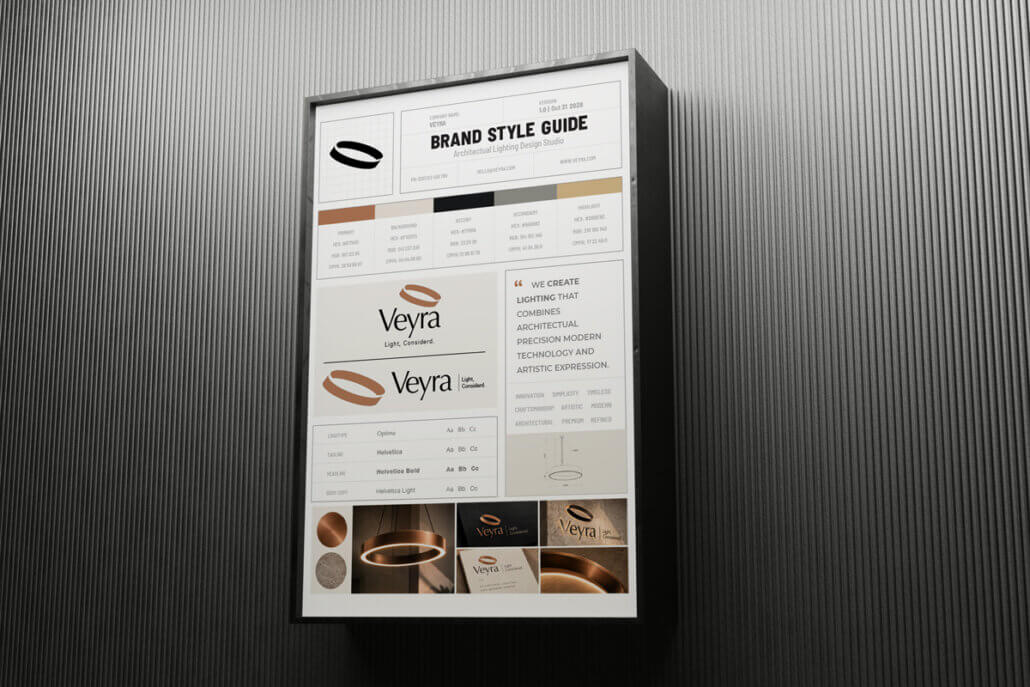
A full brand identity includes a logo set, color palette, typography, image style, brand guidelines, and ready-to-use templates. If a package skips the guidelines, you bought a logo.
This is the part most people never understand until it’s too late. Here’s what a brand identity design should deliver to you:
| Deliverable | What it is | Why you care |
|---|---|---|
| Logo set | Main logo, stacked version, icon, one-color version | Works on a website header and a pen |
| Color palette | Exact HEX, RGB, and CMYK values | Your blue stays blue on screen and on paper |
| Typography | Chosen fonts plus size and spacing rules | Text looks like you everywhere |
| Image style | Rules for photos, icons, patterns, illustration | Your feed stops looking random |
| Brand guidelines | A document with all the rules | Your team stops guessing |
| Templates | Social posts, business cards, decks | You can make new things fast |
| Final files | SVG, PDF, PNG, and source files | You own working files |
Want the deeper version? I broke it down in what a brand identity system includes.
Look at Airbnb. Its 2014 identity came with a new palette, typography, motion graphics, icons, and the Bélo mark. The logo was one piece. The system made it work. DesignStudio spent about a year on it, and team members visited 13 cities and stayed with 18 hosts to learn the community. That’s the research behind a good identity.
Why Your Logo Deserves More Attention Than You Think
A logo is the face of your business, so it earns more thought than most owners give it. Logos are easy to get. That makes people treat them like a sticker you slap on because every business needs one.
I use a band to explain it. If your business is a band, your logo is the frontman. It’s the lead singer. It’s the face people link to the whole show.
Over time, your symbol, your type, and your colors get tied to your reputation. People spot them at a glance and think of you. It works like a visual whistle. One sound, and everybody looks up.
But your brand is much more than looks. Your brand is your reputation. The logo is one of the main ways people see that reputation.
Making a mark that lasts takes more than a nice shape. Before I hand over a logo, I test it:
- Do the symbol, name, and tagline still work as one signature?
- What happens at favicon size, the tiny icon in a browser tab?
- Does it work in full color, one color, and black and white?
- How does it look embroidered on a shirt?
- Is there enough clear space around it?
- Does it work on a website header?
Each one is a real place your logo will live. A logo that only looks good large is a problem waiting to happen.
A logo is the poster child you see, not the entirety of the group. The visual rules are the systems: every color, font, and rule that makes people recognize you without seeing your name.
How the Brand Identity Design Process Works Step by Step
A good brand identity design process has six phases: discovery, strategy, concepts, refinement, system build, and handoff. Most projects run 4 to 8 weeks.
Skipping the first two phases is where bad identities start.
Pretty logos built on guesses don’t last.
Which Step Do Clients Want to Skip?
Most clients (this may include you) want to skip the small decisions in the middle of the project. I get it. At the start, everyone is excited. You share your ideas, talk about your business, and set a direction.
Then the project hits the middle. There are dozens of little choices. Which shade? Which icon style? Which font weight? Most owners would rather run their business. And they should. Your job isn't to design your brand. That's what you hired me for.
This is why I put so much weight on strategy up front. In the first two phases, you and I settle your positioning, your tone of voice, your personality, and your visual direction. Those answers become a filter. When a small choice comes up, I check it against the strategy. You stay involved without having to approve every detail.
Most clients pick the direction early, give feedback on key moments, and trust me with the execution. That works well.
How Much Does a Brand Identity Designer Cost?
An independent brand identity designer typically charges about $2,500 to $15,000 for a full identity. Agencies usually start higher, and logo-only work costs less.
Price follows scope. A logo alone is cheap. A full system with guidelines and templates takes real hours. Here are rough market ranges:
| Option | Typical range | What you usually get | Fit |
|---|---|---|---|
| DIY or AI tool | Free to ~$100 | A logo file | Testing an idea |
| Marketplace freelancer | ~$50 to $500 | A logo, little strategy | Tight budgets |
| Independent brand identity designer | ~$2,500 to $15,000 | Strategy, full identity, guidelines | Small and growing businesses |
| Boutique agency | ~$15,000 to $50,000+ | Strategy team and rollout | Larger companies |
What moves the price up or down:
- How much experience the designer has
- How much strategy work comes first
- How many deliverables you need
- How many rounds of revisions
- How fast you need it
How do you justify the cost? Add up what a messy brand already costs you. Redone flyers. Lost trust. Prices you can't raise because you look small.
Why Is One Logo $300 and Another $6,000?
The gap between a $300 logo and a $6,000 logo is mostly the research, testing, and thinking behind it. The finished picture can look similar. The work behind it does not.
I don't just open Illustrator and draw something that looks good.
A real logo project has steps:
- Research. I learn your business, your market, your competitors, and what the identity needs to say.
- Design. Sketches, concepts, and refinement.
- Testing. I check the logo at different sizes and in different uses.
- Similarity checks. I look at existing identities so I don't make something too close to another company's logo. There are design, practical, and legal reasons for this.
- Final files. The right formats. Full color, black and white, and one color. Print and digital.
- Bad Associations. Are there hidden images or symbols in your logo that could offend a woke crowd (sigh).
All of that takes time. When a price is very low, the designer may not have the time or the budget to do every step. That doesn't make them a bad designer. The math of the project limits how much time they can give you.
Where the designer lives matters too. A designer in a place with a lower cost of living can often charge less for the same hours. So compare designers who work in similar markets.
When two of them are far apart on price, the difference is usually the depth of the process, the amount of research, and the list of deliverables.
You're not paying for someone to draw a logo. You're paying for the thinking, research, testing, and experience that make an identity work for years.
When Do You Need a Brand Identity Designer?
You need a brand identity designer like a fish needs a bicycle... Kidding. You need a brand system when your look is holding your business back. The clearest sign is that you look smaller, newer, or cheaper than you really are.
Check this list. If you say yes to two or more, it's time:
- People don't understand what you do within a few seconds
- Your website, social media, and print all look different
- You charge premium prices with entry-level visuals
- You say "I don't like my website" and can't say why
- Your images and your content don't seem to match
- Your business changed, but your brand didn’t
- Your team keeps guessing fonts and colors
- A new competitor looks better than you
- Your logo falls apart when it's small
Most of these are quiet leaks. You won't see them on a report. You'll get it when leads say "let me think about it." That my friend, is the not the kiss of death. But quite the opposite.
When Can You Skip a Brand Identity Designer?
You can skip a brand identity designer if referrals already fill your calendar, or if you're still testing a business idea. In both cases, spending big on identity is early.
I won't pretend everyone needs me. A plumber with a full schedule from word of mouth may be fine. A weekend side project may be fine too. Start simple, then upgrade once the idea works.
But if you compete online, sell premium work, or want investors to take you seriously, your look does a lot of the talking.
9 Questions to Ask Before You Hire a Brand Identity Designer
Ask every brand identity designer the same nine questions. Good designers answer them clearly and quickly. Vague answers are a signal.
| # | Question | What a good answer sounds like |
|---|---|---|
| 1 | Can I see full identity projects, not just logos? | Case studies showing the whole system in use |
| 2 | What's your process and timeline? | Clear phases with dates |
| 3 | What's in the final package? | A written list of deliverables |
| 4 | Do I own everything when I finish? | Yes, with source files included |
| 5 | How many concepts and revisions are included? | Specific numbers |
| 6 | Who will I actually work with? | The person you're talking to |
| 7 | How do you start? | Strategy questions before any sketching |
| 8 | What does it cost, and what's extra? | Clear price with listed exclusions |
| 9 | How do you help me use the brand after launch? | Guidelines plus a handoff session |
Question 4 trips up more owners than any other. Get ownership in writing. A pretty logo you can't use at your own discretion is a rental. Who rents logos?
The Question I Wish Every Client Asked Me
I wish more clients asked: "What is a logo actually going to do for my business?" Or even better: "How can I use my logo to better represent my brand?"
Those beat "How much?" and "How fast?" Many owners know they need a logo. Fewer have thought about its job. How will it help people spot and remember you? How will it work across your shirts, signs, site, and invoices?
I can't give you a clean number for what a strong identity is worth. Big public companies have market values you can look at. Small private businesses don't. But hard to measure doesn't mean it doesn't matter. A good logo makes your marketing consistent. It makes you easier to recognize. And it gives everything else you build a visual base.
It won't create a great reputation by magic. Your customers' experiences do that. The logo becomes the symbol of that reputation.
So skip "What will my logo look like?" Ask "How can this logo work for my business?"
Red Flags When Hiring a Brand Identity Designer
The biggest red flags are no questions about your business, portfolios with only logos, and vague file ownership. Any one of these is reason to pause.
- ❌ No discovery. They quote a price before learning anything about you.
- ❌ Logo-only portfolio. You can't tell if they can build a system.
- ❌ Rock-bottom pricing. Strategy takes time. Time costs money.
- ❌ Template or AI work sold as custom. Ask how original work is created.
- ❌ No source files. You'll be stuck when you need a change.
- ❌ Sales guarantees. No designer controls your revenue.
- ❌ Copycat style. If their work looks like a famous brand, yours will too.
- ❌ No guidelines. You'll be guessing in six months.
Brand Identity Design Mistakes: What Gap and Cracker Barrel Got Wrong
The most costly brand identity mistake is changing an identity without learning what customers already love about it. Two big companies show how fast that goes wrong.
The Gap Logo Redesign
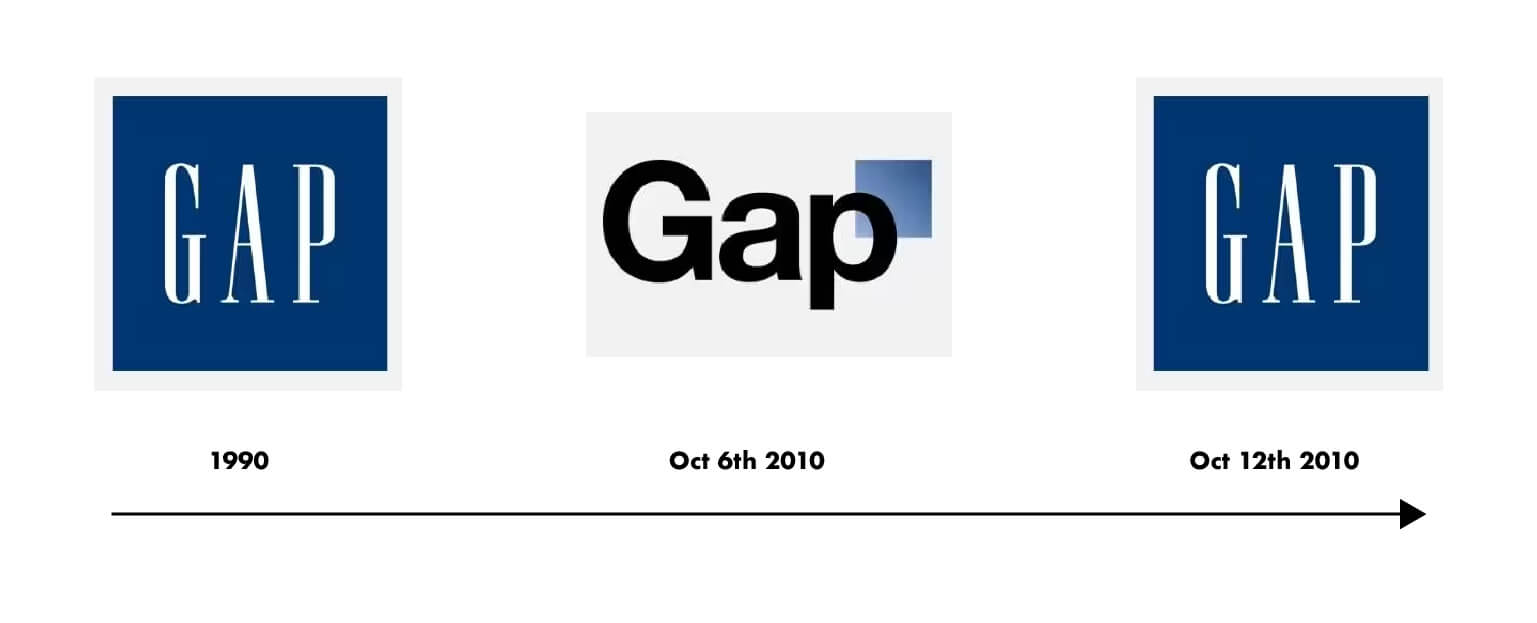
Gap had a logo people knew by heart. White uppercase serif letters on a blue square. In 2010, the company swapped it for a plain sans-serif word with a small blue gradient square.
The backlash was fast. The new design wasn't very interesting. But the bigger problem was that Gap underestimated how much people felt about the old one. The company went back to its old logo within days.
The Cracker Barrel Rebrand
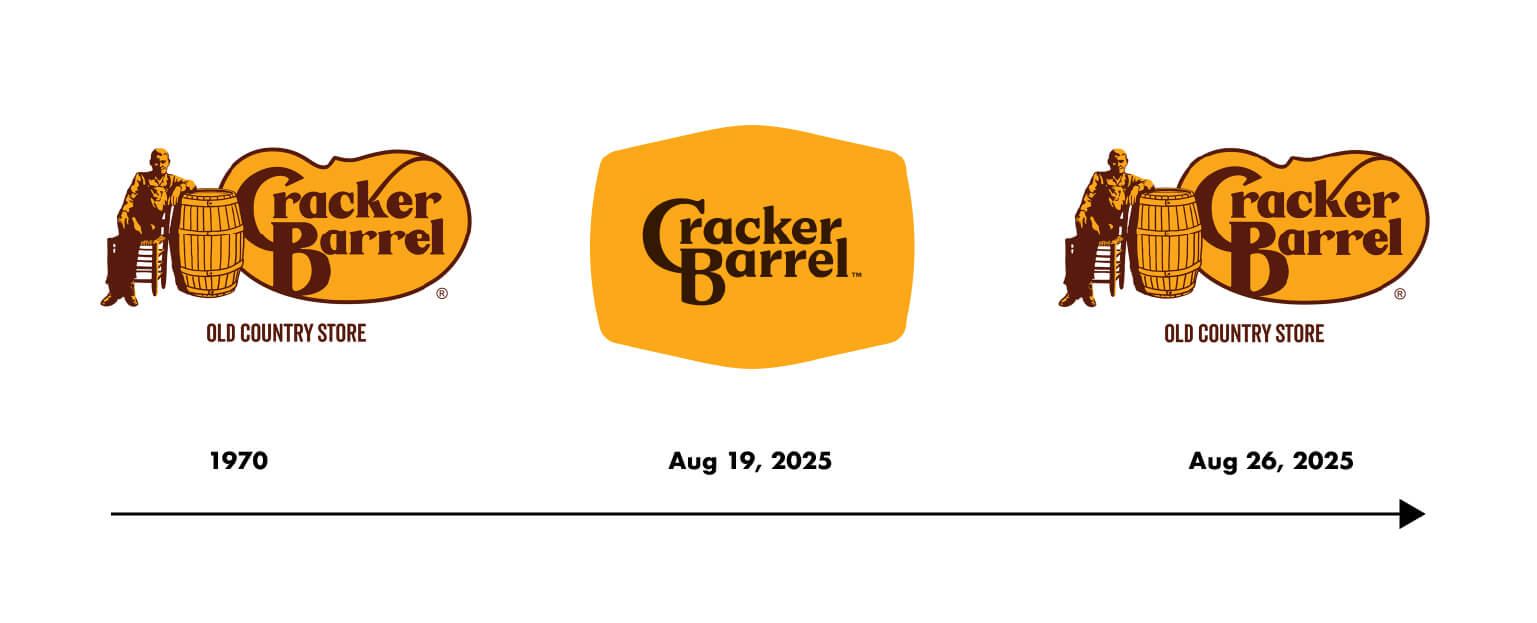
Cracker Barrel's change went past the logo. It also moved toward simpler, more modern looks inside its restaurants. The brand had built a place people knew: nostalgic Americana, rustic decor, and a lot of personality.
Some customers felt the company was removing the exact things that made their own personal memories special. A cleaner look can still cost you character. Customers pushed back, and the company went back to its old logo.
What These Two Rebrands Teach
A brand is not just a logo. It's the whole experience people link to a company. Decor, mood, type, colors, photos, and even how a location feels all shape it.
So never treat an existing brand like a blank canvas. Find out what people already recognize, what they value, and which pieces carry meaning. Sometimes modernizing makes sense. But modern shouldn't mean throwing out everything that made you recognizable.
That's why I start every project with strategy.
Freelancer, Agency, or DIY Tool: Which Fits You?
An independent brand identity designer fits most small businesses best. You get senior attention and a full system at a fair price. Agencies fit larger budgets, and DIY tools fit early testing.
| Factor | Independent designer | Agency | DIY tool |
|---|---|---|---|
| Cost | Mid | High | Lowest |
| Who does the work | The person you meet | A team | You |
| Strategy included | Usually | Yes | No |
| Speed | 4 to 8 weeks | 8 to 16+ weeks | Same day |
| Uniqueness | High | High | Low |
| Best for | Small and growing businesses | Large companies | Idea testing |
Local or remote? Remote works great for most projects. Local helps when you want in-person workshops or signage, or you want someone who knows your market. If you're in Atlanta, I wrote more on hiring a professional logo designer in Atlanta, and you can see how I work at Giftbox Creative.
How to Get the Best Work From Your
Brand Identity Designer
Brand Identity Designer
You get the best work from a brand identity designer by being clear about your customers, giving honest feedback, and asking for guidelines and source files at the end.
Before you start:
- Write down who your best customer is
- Collect three brands you admire and say why
- Name one thing you hate. Designers love this.
During the project:
- Settle the big direction early, then trust your designer with the details
- React to the work. Ask: "Would my customer trust this?"
- Give one set of feedback from one person. Too many voices make mush.
- Ask questions when you're unsure. Good designers like them.
At the end:
- Get all source files and the guidelines document
- Ask for a short handoff session so your team knows how to use it
- Save everything in a shared folder
Frequently Asked Questions
What does a brand identity designer do?
A brand identity designer creates the visual system for a business. That includes the logo, colors, fonts, image style, and brand guidelines. They also make sure those pieces work together across your website, social media, print, and packaging.
How much does a brand identity designer cost?
Most independent brand identity designers charge roughly $2,500 to $15,000 for a full identity. Logo-only work costs less, and agencies often start around $15,000. The final price depends on scope, strategy work, revisions, and timeline.
Why do some logo designers charge $300 and others $6,000?
The price gap usually reflects the amount of research, testing, and file preparation behind the logo. A higher price often covers competitor research, similarity checks, testing at different sizes, and final files in the right formats. A very low price can mean the designer had less time to do those steps.
What's the difference between a brand identity designer and a graphic designer?
A brand identity designer builds the full visual system for a business. A graphic designer creates individual pieces, like flyers or social posts. Many designers do both, so check what's included before you hire.
Does a brand identity designer build websites?
Some do. I design and build websites that support the brand identity. But server administration, database migrations, and custom software are IT work and usually fall outside a designer's scope. Ask what's included before you sign.
How long does it take to work with a brand identity designer?
A typical small business project takes 8 to 16 weeks. That covers discovery, strategy, concepts, revisions, guidelines, and handoff. Rushed timelines usually mean skipped strategy.
What should a brand identity design package include?
A solid package includes a logo set, color palette, typography, image style rules, website and a brand guidelines document. It should also include templates and final files in formats like SVG, PDF, and PNG. Ask for the list in writing before you sign.
How do I choose a brand identity designer?
Look for full identity case studies, a clear process, and written terms on ownership and revisions. Ask the 9 questions in this guide and compare the answers. The right designer asks about your customers before talking about colors.
How do you become a brand identity designer?
Most people start with graphic design skills, then add strategy and systems thinking. You'll need strong typography and color skills, experience with tools like Illustrator, and a portfolio of full identity case studies. Real client work or personal projects both count.
The Short Long Of It
A good brand identity designer gives you more than a logo. You get a full system: logo set, colors, fonts, image style, and guidelines. You also get a look that stays consistent while your business grows.
You know what the work includes, why prices vary, and which questions to ask. You've seen what happens when a company skips strategy. Use the nine-question table on your next call and compare the answers side by side.
Think about your own business for a second.
If a stranger judged you by your look alone, would they guess how good your work really is?
About the Author
