
Small business branding is how your business looks, sounds, and feels everywhere a customer sees it. The logo you have. The colors that belong to you. Your words. Your positioning. When all of it matches, people trust you. When it doesn’t, people move on. You can achieve this without spending a lot of money. You need a plan. And in this post, I’m going to hand you the whole thing, the steps, the costs, the mistakes, and a 30-day plan to start.
Basically, your brand is already working right now. For you or against you. There’s no neutral. A study from Marq (formerly Lucidpress) found that consistent branding can boost revenue by up to 23%.
It’s about money.
So let’s build yours. Together.
Small business branding is the process of shaping how your business looks, sounds, and acts at every point where customers see it. It includes your logo, colors, fonts, messaging, and visuals. Good branding builds trust and recognition, which helps customers pick you over competitors. Unlike big-company branding, small business branding wins through consistency, not only big budgets.
What Is Small Business Branding?
Small business branding is everything a customer sees, reads, and feels when they come across your business. It’s much bigger than a logo.
Think of it like this. Your logo is your face. Your brand is your whole personality.
Here’s what your brand actually includes:
- Your logo. The mark people remember you by.
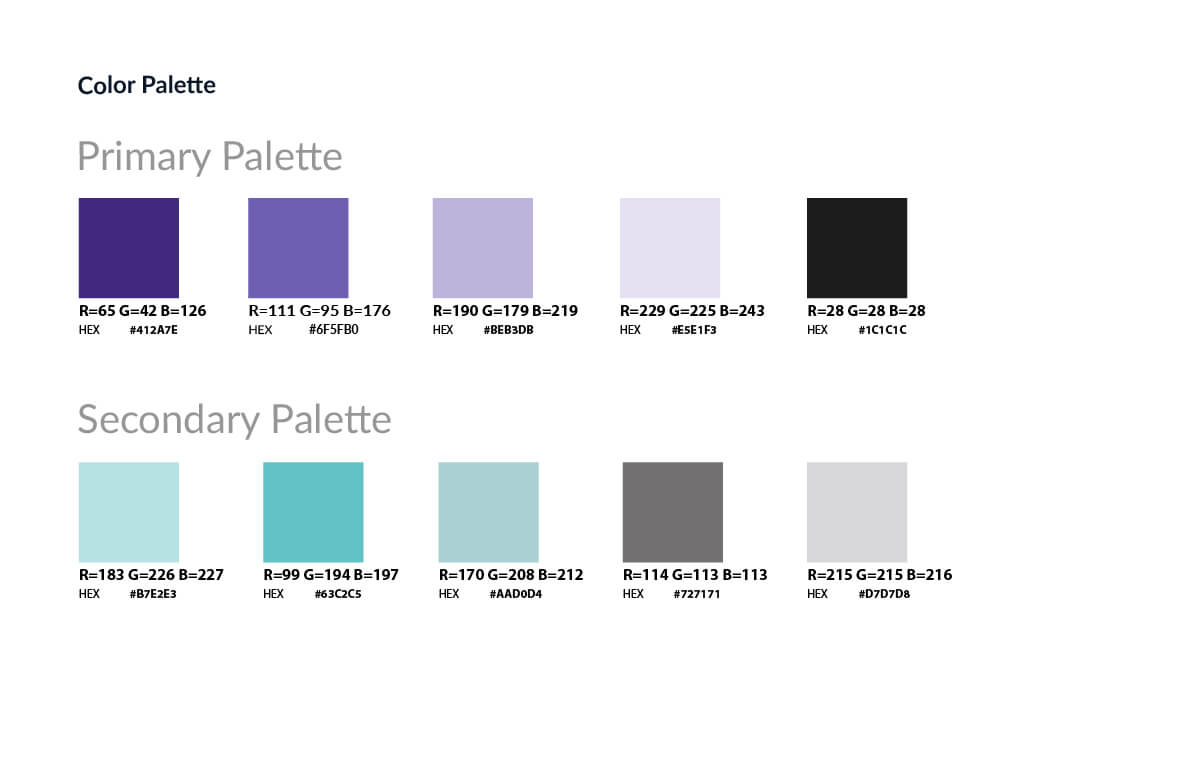
- Your colors. The 2–4 colors you use everywhere.
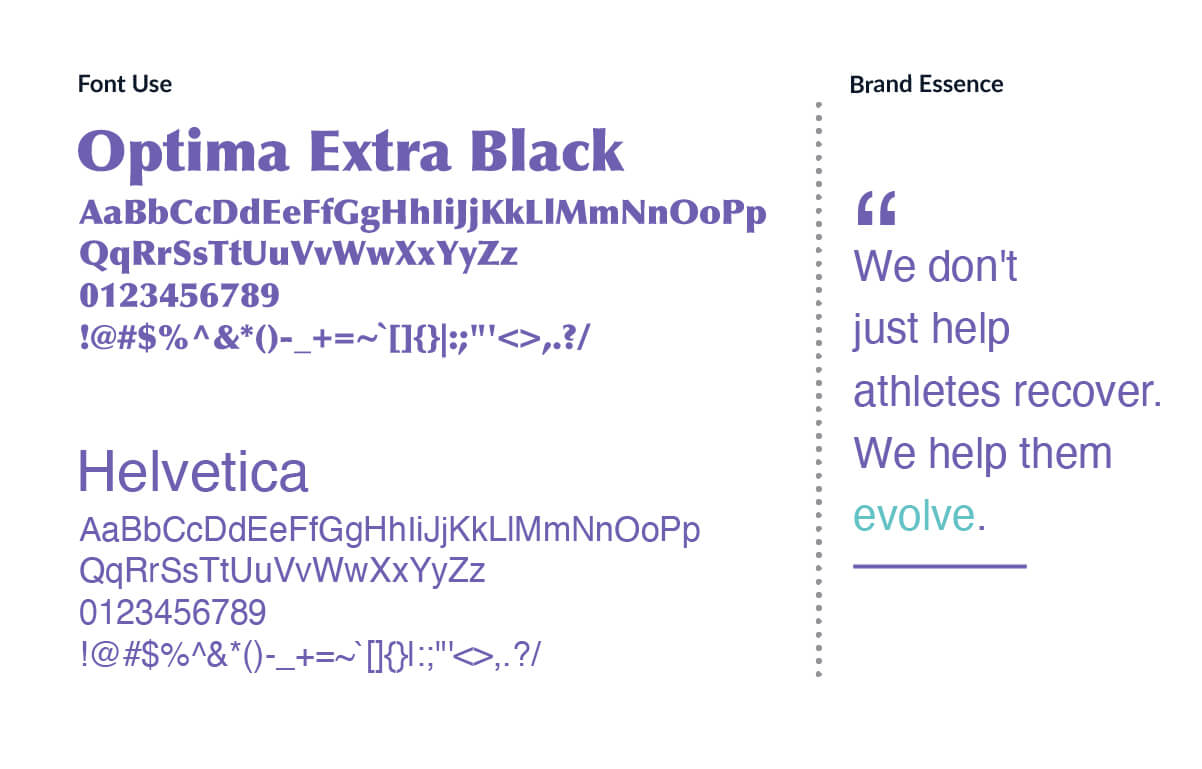
- Your fonts. The way your words look.
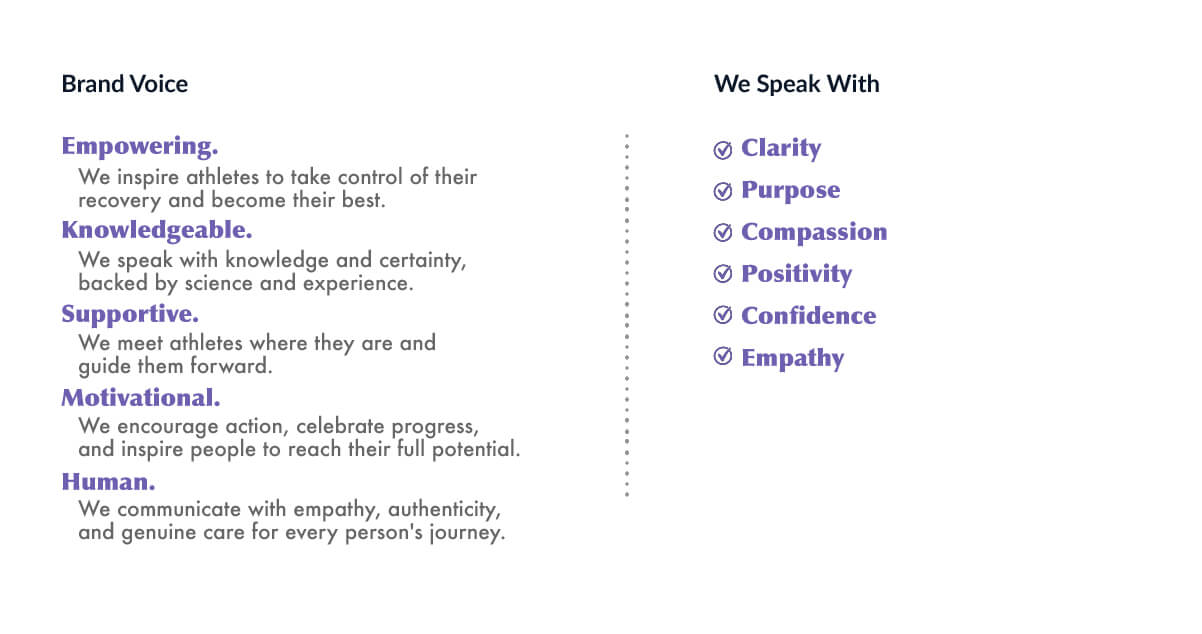
- Your voice. The way your words sound.
- Your message. What you say and who you say it to.
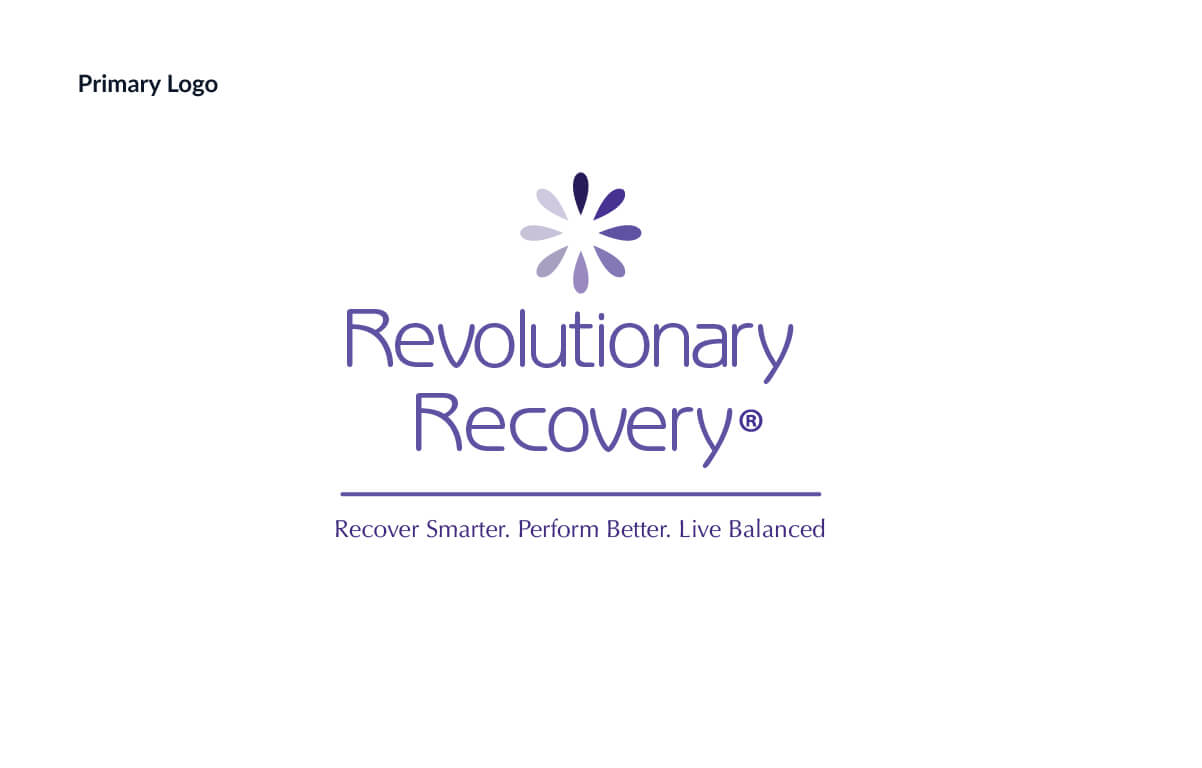
- Your guidelines. The rulebook that keeps it all matching.
When these pieces work together, you look like one solid business. When they don’t, you look like five different businesses wearing a trench coat.
Why Small Business Branding Matters More Than Ever
Branding matters because people judge your business in seconds, and trust is what they’re judging. Big companies already have trust. You have to build it. Branding is how.
Here’s what a strong brand does for you:
- ✅ It makes you look established. Even if you started last month.
- ✅ It builds trust fast. People buy from businesses that look put together.
- ✅ It makes you memorable. Seen once, forgotten. Seen five times looking the same? Remembered.
- ✅ It lets you charge more. Professional brands don’t compete on price. They compete on value.
And one more thing that matters in 2026. AI search. When someone asks ChatGPT or Google “best [your service] near me,” a consistent brand with a clear name and clear message is easier for AI to find, understand, and recommend. People trust brands they already know and a messy brand confuses the program the same way it confuses people.
You and I both know small businesses that do amazing work but look like they don’t. Don’t let that be you.
What’s Actually in a Branding Package?
A basic branding package includes a logo, colors, fonts, and a guidelines document. A full package adds strategy, templates, and a brand system to follow. Knowing this protects you when you hire someone.
Here’s the plain-English version:
| What You Get | Basic Package | Full Package |
|---|---|---|
| Logo (main version + small versions) | ✅ | ✅ |
| Color palette with exact codes | ✅ | ✅ |
| Fonts with usage rules | ✅ | ✅ |
| Brand guidelines document | ✅ | ✅ |
| Brand strategy (audience, positioning, message) | ❌ | ✅ |
| Voice and messaging guide | ❌ | ✅ |
| Templates (social posts, stationery, newsletter) | ❌ | ✅ |
| Full brand system that scales | ❌ | ✅ |
One warning from me. Some designers say “strategy included” and hand you one paragraph. Ask exactly what you’ll get before you pay. What’s included? What questions will it answer? If they can’t tell you, walk away.
The 9 Steps to Build a Small Business Brand
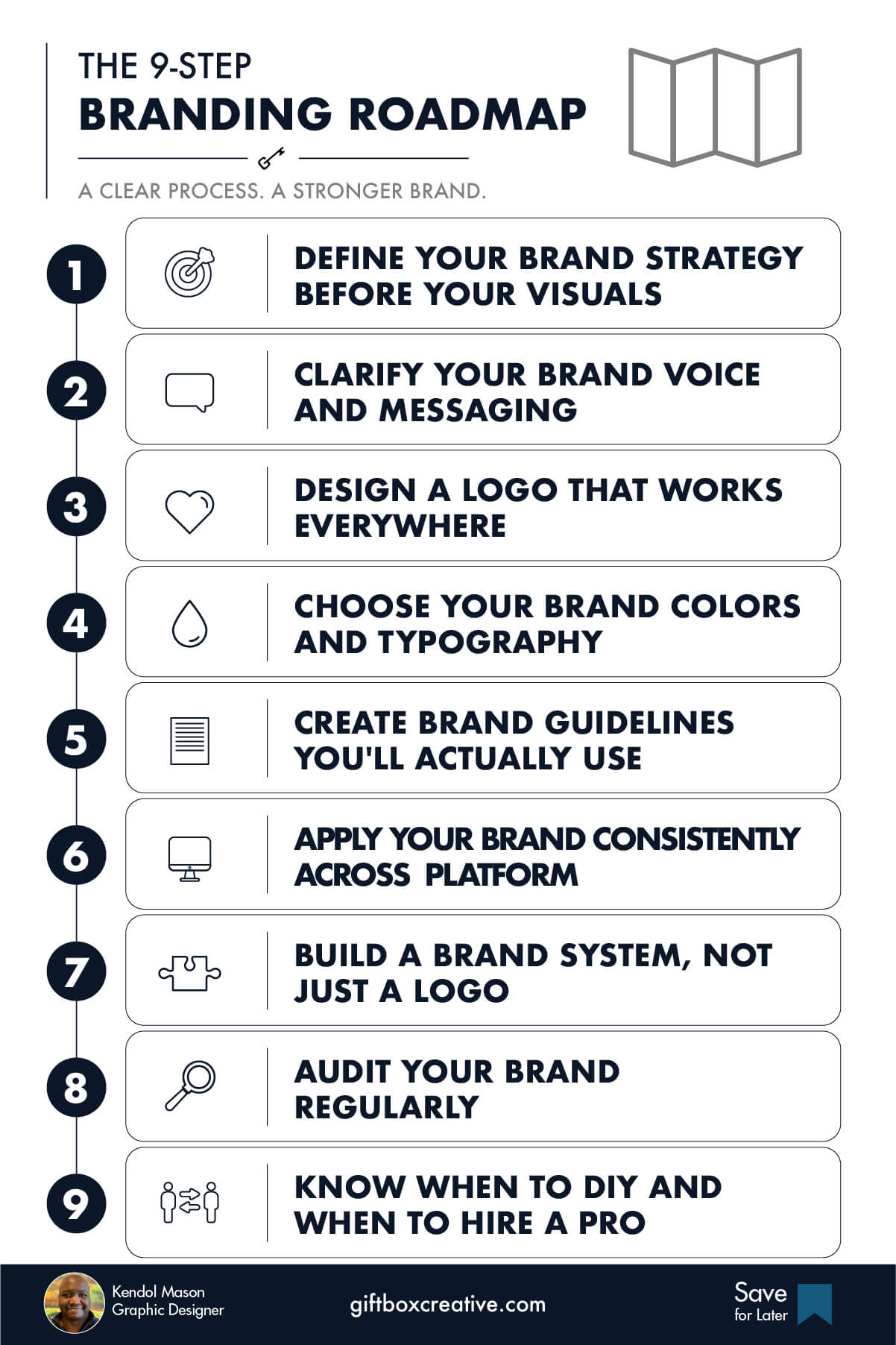
Building a brand comes down to 9 steps: strategy, voice, logo, colors and fonts, guidelines, consistency, systems, audits, and knowing when to get help. Let’s walk through each one.
1. Define Your Brand Strategy Before Your Visuals
Strategy comes first. Always. Your logo means nothing if you don’t know who it’s talking to.
Before you design, answer these three questions:
- Who is my customer? Be specific. “Everyone” is not an answer.
- What makes me different? Why you and not the shop down the street?
- How do I want people to feel? Safe? Excited? Taken care of?
Write your answers down. Keep them to one page. This page now drives every design choice you make. No guessing.
2. Clarify Your Brand Voice and Messaging
Your brand voice is how your business talks. And it should sound the same everywhere.
Pick 3 words that describe how you want to sound. For example:
- Friendly. Simple. Honest.
- Bold. Direct. Confident.
- Warm. Calm. Caring.
Now test everything you write against those 3 words. If a sentence doesn’t match your 3 words, you can always rewrite it.
3. Design a Logo That Works Everywhere
A good logo works at every size, on every background, in every place you’ll use it. That’s the whole shebang. Makes the entire journey worth it in the end, to guarantee that you’ll have all the file types you need in one place.
Your logo needs to look right:
- Tiny, as a social media profile picture
- Big, on a sign or banner
- In full color and in plain black or white
- On light backgrounds and dark ones
Lots of logos fail this test. They look great on screen and fall apart everywhere else. If your logo only works in one place, it doesn’t work.
This is where a pro pays off, honestly. A logo designer builds for these uses from day one.
4. Choose Your Brand Colors and Typography
Pick 1–2 colors and 2 fonts. Then stop. When you consider the value of those colors, it’s more than enough.
Here’s a simple recipe:
- 1 primary color. This is your color. Use it the most.
- 1–2 support colors. These back up your primary color.
- 1 accent color. For buttons and things you want people to click.
- 1 headline font + 1 body font. No more.
Write down the exact color codes. Not “blue.” The exact blue. This matters more than you think.
5. Create Brand Guidelines You’ll Actually Use
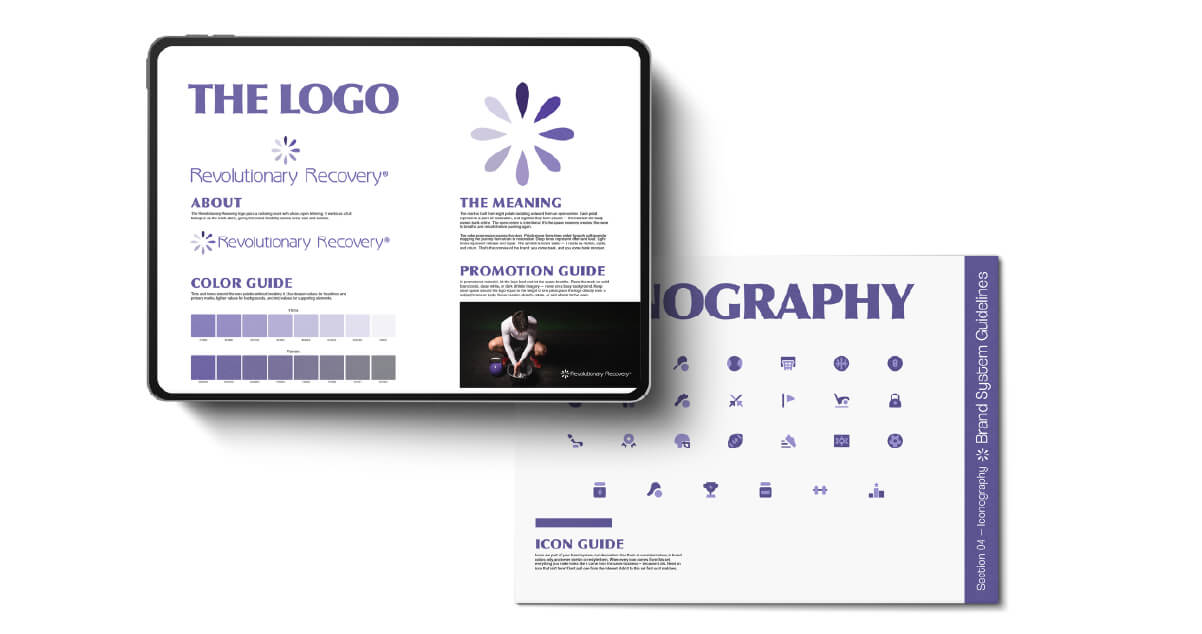
Brand guidelines are a simple rulebook that shows how to use your logo, colors, fonts, and visual voice. This doesn’t always need to be a 50-page book. A few pages can work.
Your guidelines should show:
- Your logo, and how not to use it (no stretching, no weird colors)
- Your exact color codes
- Your fonts and where each one goes
- Your 3 voice words
- A few examples of your brand done in practical and maybe aspirational applications
Why does this matter? Because future-you will forget. And anyone who ever touches it, a vendor, a freelancer, a new hire will need the rulebook too.
6. Apply Your Brand Consistently Across Every Platform
Consistency means your brand looks and sounds the same everywhere a customer can find you. In fact, it’s also where most of the money is.
Go through this checklist:
- ✅ Website
- ✅ Google Business Profile
- ✅ Instagram, Facebook, LinkedIn (profile pics, banners, post style)
- ✅ Email signature
- ✅ Invoices and proposals
- ✅ Business cards
- ✅ Packaging or signage, if you have it
Every single one should look like it came from the same business. Because it did. Right?
7. Build a Brand System, Not Just a Logo
A brand system is a set of matching pieces that work together, so every new thing you make already looks like you. You’re not left reinventing the wheel, and it’s the one that separates real brands from logos with a unified website and social media presence.
Here’s the difference:
| Just a Logo | A Brand System | |
|---|---|---|
| What you get | One mark | Logo + colors + fonts + templates + rules |
| Making new stuff | Start from scratch every time | Plug into templates |
| Consistency | Depends on your mood that day | Built in |
| As you grow | Falls apart | Grows with you |
With a system, your next flyer, post, or slide deck already knows what you look like. You stop reinventing your brand every Tuesday.
8. Audit Your Brand Regularly
A brand audit is a quick check-up to catch anything that has drifted off-brand. Do it twice a year.
Here’s how:
- Open every place your brand lives. Use the checklist from step 6.
- Ask: does this still match my guidelines?
- Fix what drifted. Old logo hiding on your Facebook banner? Update it.
- Ask: does my brand still fit my business? Businesses grow. Sometimes brands need to catch up.
Thirty minutes. Twice a year. It really doesn’t take much.
9. Know When to DIY and When to Hire a Pro
DIY the small stuff. Hire out the foundation and all the stuff you don’t want to do or don’t know how. That’s my personal rule.
You can DIY:
- Social posts using your templates
- Simple photos and self-made videos (in fact I would encourage you too)
- Keeping things consistent day to day
You should probably get help with:
- Your logo and visual identity
- Your brand strategy
- Your brand system and guidelines
Why? Because the foundation gets built once and everything else sits on top of it. If the foundation is shaky, everything you DIY on top of it wobbles too. Working with a brand identity designer up front usually costs less than fixing a messy brand later.
And let’s face it. Most of the time your brand won’t live up to your own expectations when you DIY your brand. Then not only have you wasted time, but you’re then looking for someone else to fix it for you.
3 Simple Tricks That Make Brands Instantly Recognizable
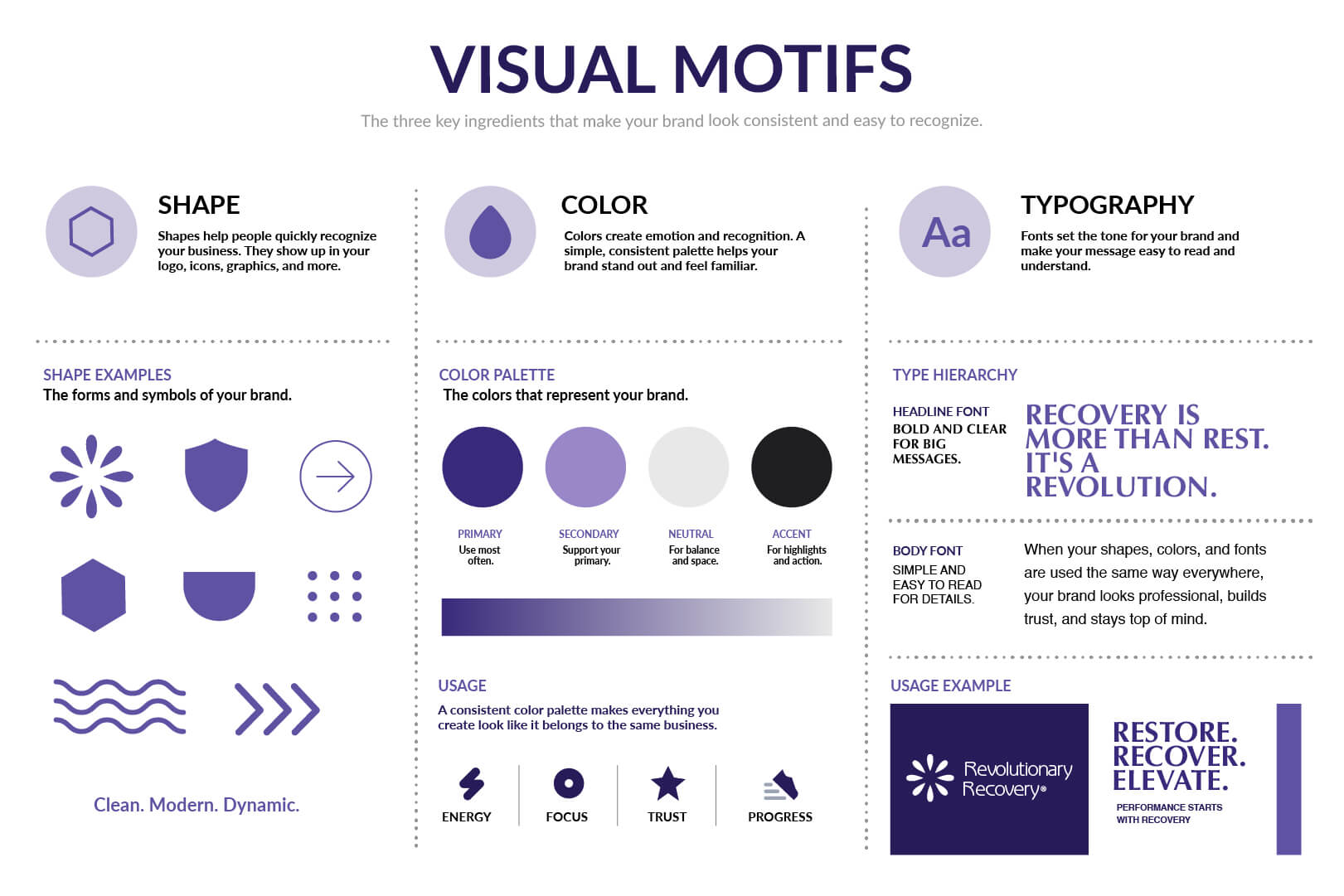
The fastest way to be recognized is to repeat one shape, one color, or one font style everywhere. Pros call this a brand motif. I call it your signature move.
Here are the three tricks:
Trick 1: Repeat a shape. Take one shape from your logo a circle, arc, line, square, triangle, whatever. Use it on your business cards, posts, website, or packaging. Every time people see that shape, they think of you. Even without your name on it.
Trick 2: Own a color. Think about it. UPS owns brown. Tiffany owns it’s blue. You can own a color in your town and your industry. Studies show a signature color can boost brand recognition by up to 80% — that’s how strongly people tie a color to a business. Use your primary color so consistently that people see it and think of you first.
Trick 3: Stick to one font style. Use the same fonts on everything. Your sign, your menu, your Instagram. It sounds small. It’s not. Fonts are one of the first things that make a business “feel off” when they don’t match. Look to fonts that are available not he web too that will ensure that the same font shows up on your website.
Pick one trick to start, then master it, and finally add the next.
Small Business Branding on a Budget: What to Prioritize
If money is tight, do it in this order: logo and colors first, consistency second, everything else later. You don’t need it all on day one.
| Priority | What to Do | Why |
|---|---|---|
| Do First | Logo, colors, fonts, one-page guidelines | This is your foundation |
| Do Next | Match every platform to your guidelines | Consistency builds trust… and it’s free |
| Do Later | Templates, photo style, packaging, brand video | Nice upgrades once the base is solid |
And here’s where owners waste money. Learn from their pain:
- Brand photoshoots before the basics are done
- Fancy motion graphics before the logo is even final
- Rebranding when the real problem was inconsistency
But what matters most? Consistency costs absolutely nothing. It just takes discipline. A small brand used the same way everywhere beats a fancy brand used badly.
Common Small Business Branding Mistakes to Avoid
The biggest branding mistake is inconsistency. Everything else is a distant second. But let’s cover the big ones.
| Mistake | Do This Instead |
|---|---|
| Different look on every platform | Use your guidelines everywhere |
| Chasing design trends | Pick a style that fits you and stick with it |
| DIY logo from a free tool | Invest in a logo built to work everywhere |
| No brand guidelines | Make a one-pager. Today. |
| Copying a bigger competitor | Lean into what makes you different |
| Rebranding every year | Fix consistency first. Rebrand only when the business truly changed |
One more mistake worth naming. Waiting. A lot of owners say “I’ll fix my brand when I’m bigger.” Don’t! Your brand is part of how you get bigger. Waiting just means more months of looking less professional than you are.
How Much Does Small Business Branding Cost?
Small business branding usually costs anywhere from about $100 DIY to $10,000+ with an agency, with most small businesses landing in the $1,000–$5,000 range with a freelancer or small studio.
Here’s how the options compare:
| Option | Rough Cost | Timeline | Best For |
|---|---|---|---|
| DIY | $0–$500 | Days to weeks | Testing an idea, pre-launch |
| Freelancer / small studio | $1,000–$5,000 | 2–6 weeks | Most small businesses |
| Agency | $5,000–$25,000+ | 1–3 months | Funded or scaling businesses |
So which one should you pick? Here’s my simple guide:
- Pick DIY if you’re still testing whether the business will even work.
- Pick a freelancer or studio if you have real customers and you’re ready to look like it. This is most of you, I think.
- Pick an agency if you have a team, a budget, and a brand that lives across many products or locations.
A quick word on the cheap end. A $50 logo isn’t really $50. If it doesn’t work across platforms, you’ll redo it. Then redo your cards, your site header, your signs. Cheap branding is often the most expensive kind. You just pay for it in pieces.
Your First 30 Days: A Simple Brand Action Plan
You can build a working brand foundation in 30 days by doing one small thing each week. Here’s the plan. Steal it. Use it.
| Week | What to Do | Time Needed |
|---|---|---|
| Week 1 | Answer the 3 strategy questions. Pick your 3 voice words. | 2 hours |
| Week 2 | Sort out your logo, colors, and fonts. Hire help here if you can. | 2–4 hours (or kick off with a pro) |
| Week 3 | Build your one-page brand guidelines. | 2 hours |
| Week 4 | Update every platform to match. Use the step 6 checklist. | 3–4 hours |
That’s roughly 10 hours of your time. One month. And at the end of it, your business looks like one business everywhere it shows up. Most of your competitors will never do this.
Here’s the deal
Let’s keep it simple.
Your brand is a system, not a logo. Strategy comes before design. Consistency beats budget. And you now have something most people never get: all the steps, hidden costs, tricks, and a 30-day plan on one page.
You don’t need to do it all today. Just start Week 1. Three questions. Three voice words. Two hours.
So here’s my question for you: if a stranger looked at your website, your Instagram, and your business card side by side right, would they know it’s all the same business?
Frequently Asked Questions About Small Business Branding
What is the fastest way to brand a small business?
The fastest way to brand a small business is to define your customer and message first, then get a logo, 2–4 colors, and 2 fonts, and apply them the same way on every platform. With a freelancer, this can be done in 2–4 weeks. Speed comes from making decisions once and sticking to them.
How much should a small business spend on branding?
Most small businesses spend between $1,000 and $5,000 on branding when working with a freelancer or small studio. DIY options can cost under $500, and agencies often charge $5,000 or more. Spend the most on your logo, visual identity, and guidelines, because everything else is built on top of them.
What's the difference between a logo and a brand?
A logo is a single mark that identifies your business. A brand is the full experience of your business, including your logo, services, reputation, voice, and how customers feel about you. Your logo is one piece of your brand, not the whole thing.
What is included in a small business branding package?
A basic small business branding package includes a logo with multiple versions, a color palette with exact color codes, fonts with usage rules, and a brand guidelines document. Full packages add brand strategy, a voice and messaging guide, templates, and a complete brand system. Always ask for the exact list of deliverables before paying.
How long does small business branding take?
Small business branding usually takes 2 to 6 weeks with a freelancer or small studio, and 1 to 3 months with an agency. DIY branding can be faster but often takes a toll overall because of the unexpected redos down the line. Strategy and feedback rounds are what take the most time, not the design itself.
Do small businesses really need brand guidelines?
Yeah. Brand guidelines are a simple rulebook showing how to use your logo, colors, fonts, and voice. Even a one-page version keeps your business looking consistent everywhere, which builds trust with prospects and customers. Guidelines also make it easy for anyone who helps you to keep everything on-brand.
Can I brand my small business myself without a designer?
Yes, you can brand a small business yourself using free or low-cost tools, and DIY branding works fine for testing a new business idea. However, most businesses with real customers get better results hiring a professional for the foundation (logo, visual identity, and guidelines) then handling day to day brand tasks themselves using templates.
When should a small business rebrand?
A small business should rebrand when its look no longer matches its business, such as after changing its audience, services, or prices, or when the brand looks clearly outdated. Don’t rebrand just because you’re bored of your look. If your brand is inconsistent, fix the consistency first, because that solves most problems without a rebrand.
About the Author


